In some rural areas of Tánh Linh, families depend on collecting and selling recyclable materials, plastic, glass, and cans, to earn a living. This activity, though modest, is often the main source of income for many households, especially when health problems or limited job opportunities make other kinds of work impossible.
During my visits, I met families who have been supported by the Thiện Chí Center for many years. Some of them started this activity with small loans of around 4 to 5 million đồng, allowing them to buy basic equipment or increase their collection volume.
One woman I met supports her large family this way. Every day, she collects plastic bottles, cans, and other materials from the streets and surrounding villages. She sells her collection to a recycling company about three times a month, earning around 6 000 đồng per kilogram. To increase her income, she also buys recyclables from her neighbors at 5 000 đồng per kilogram, making a small profit of about 1 000 đồng per kilogram.
With a 5 million đồng loan from the Thiện Chí Center, she was able to invest in fertilizers for her crops and buy more recyclables. Her husband works as a day laborer, and together they do their best to provide for their four children and a granddaughter.
Their house was built with the help of the government, and despite the difficulties, the mother remains positive. She says she feels lucky to receive support from Thiện Chí, from the authorities, and from her neighbors.
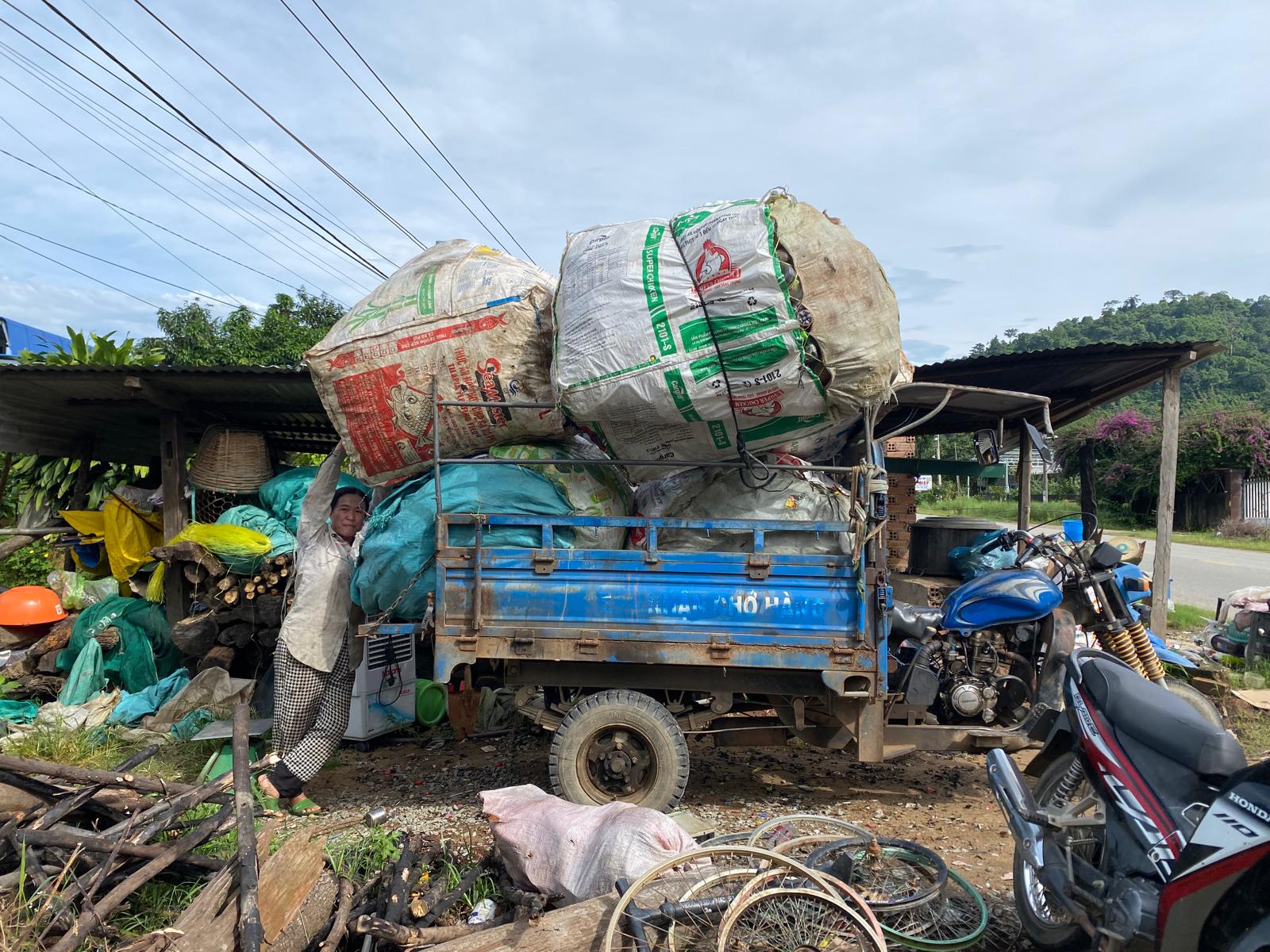
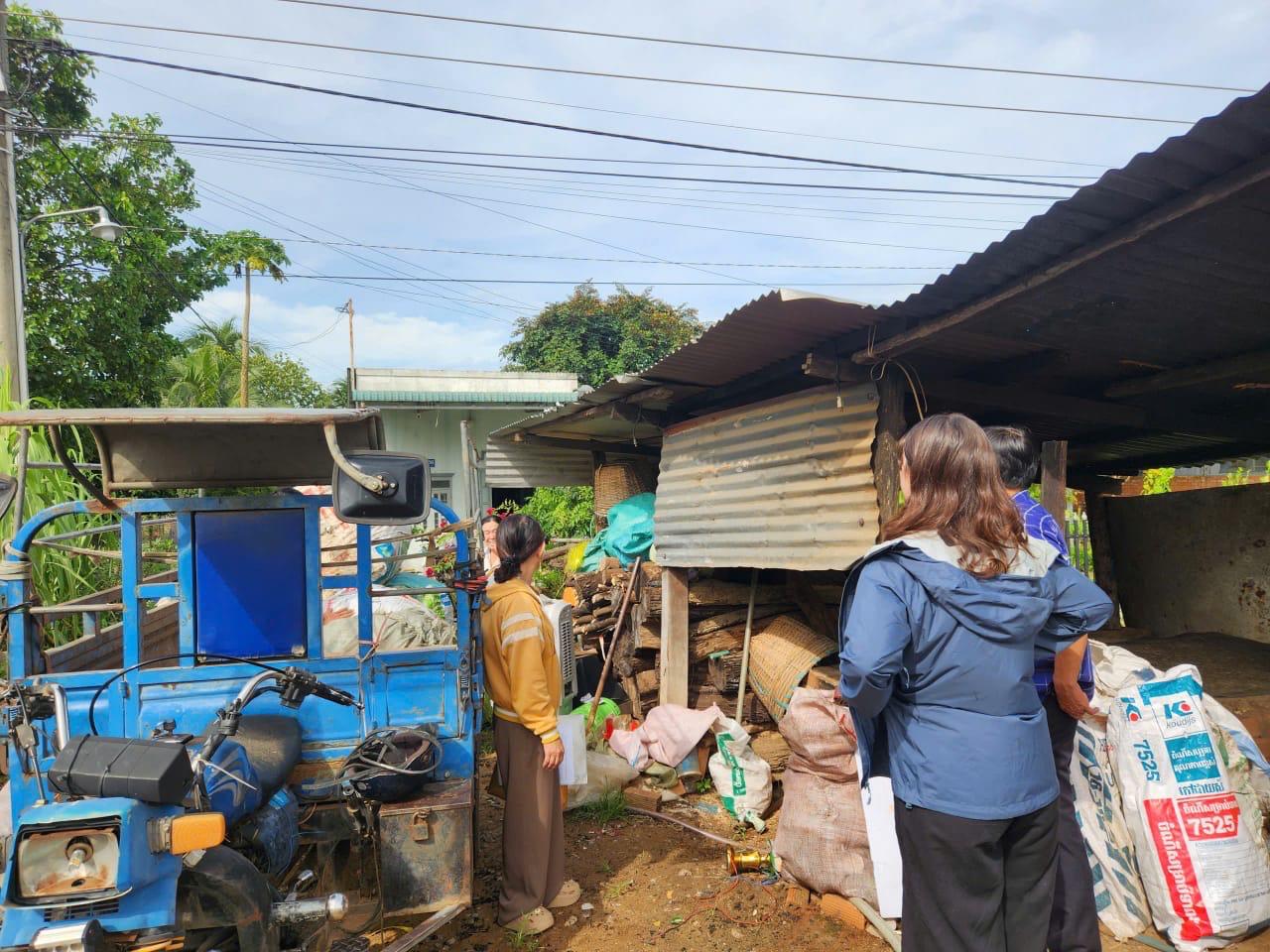
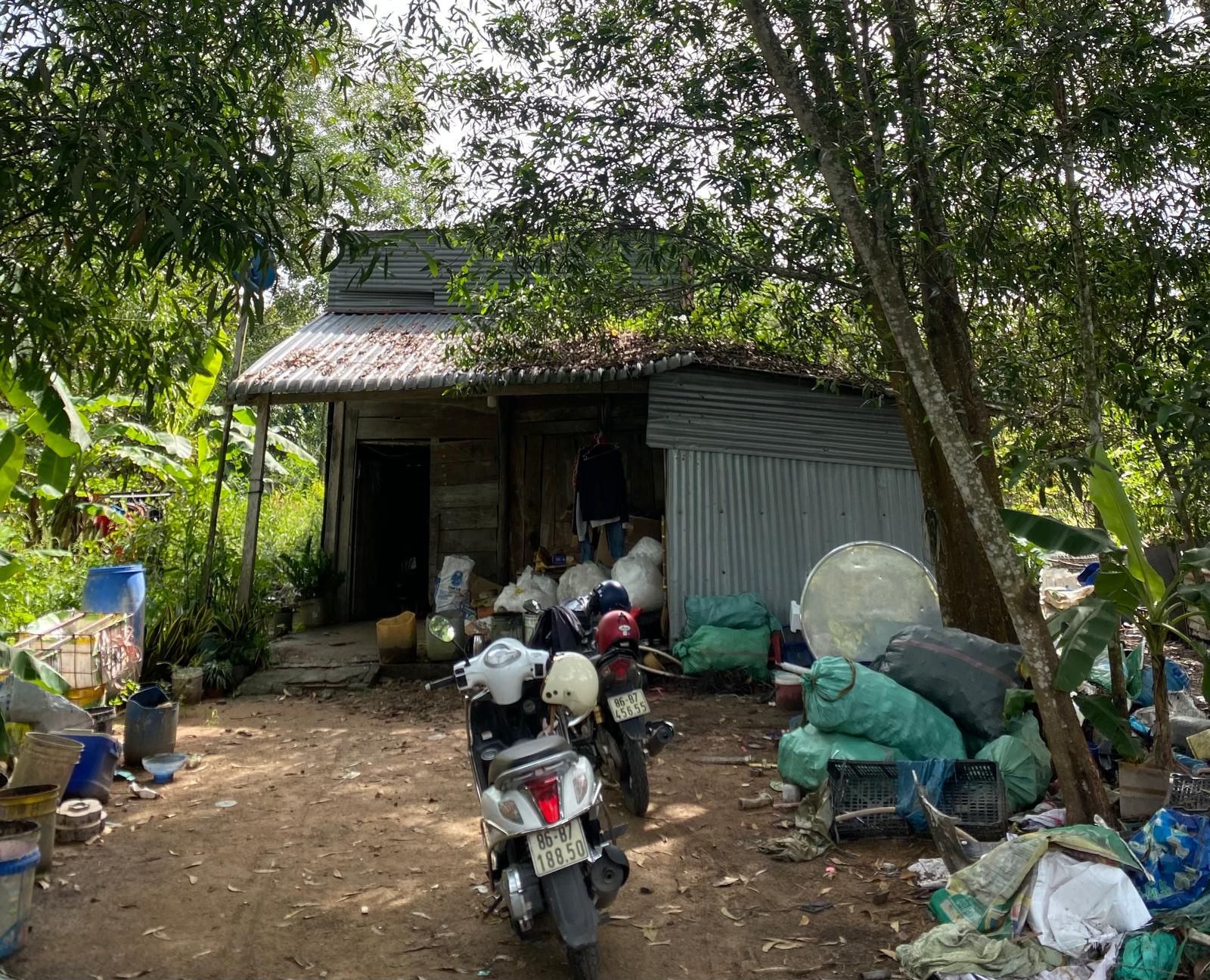
Another woman, has been collecting and selling plastic for over six years. Because of a leg illness, she can no longer walk long distances, so her son, only 18, helps by collecting items from nearby neighborhoods. He had to stop school to support his mother, working part-time in a motorbike repair shop while continuing to pick up recyclables. Despite their efforts, their income remains modest, around 800,000 đồng per month per person, but it’s an improvement from the past.
Behind this simple form of trade lies an essential contribution to both family income and environmental protection. By collecting and recycling waste, these families help reduce pollution while sustaining themselves through effort, cooperation, and community support.
Leticia