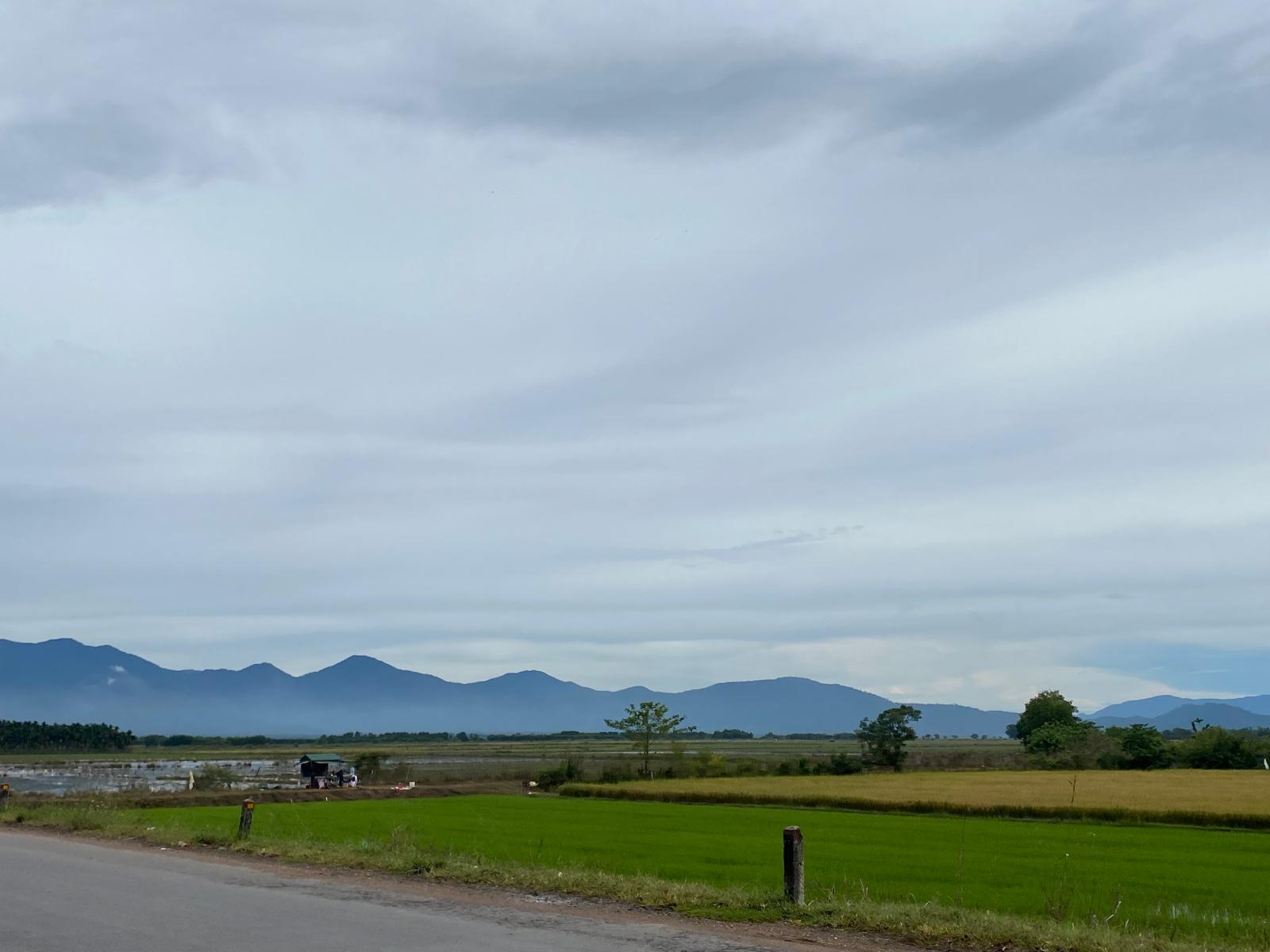
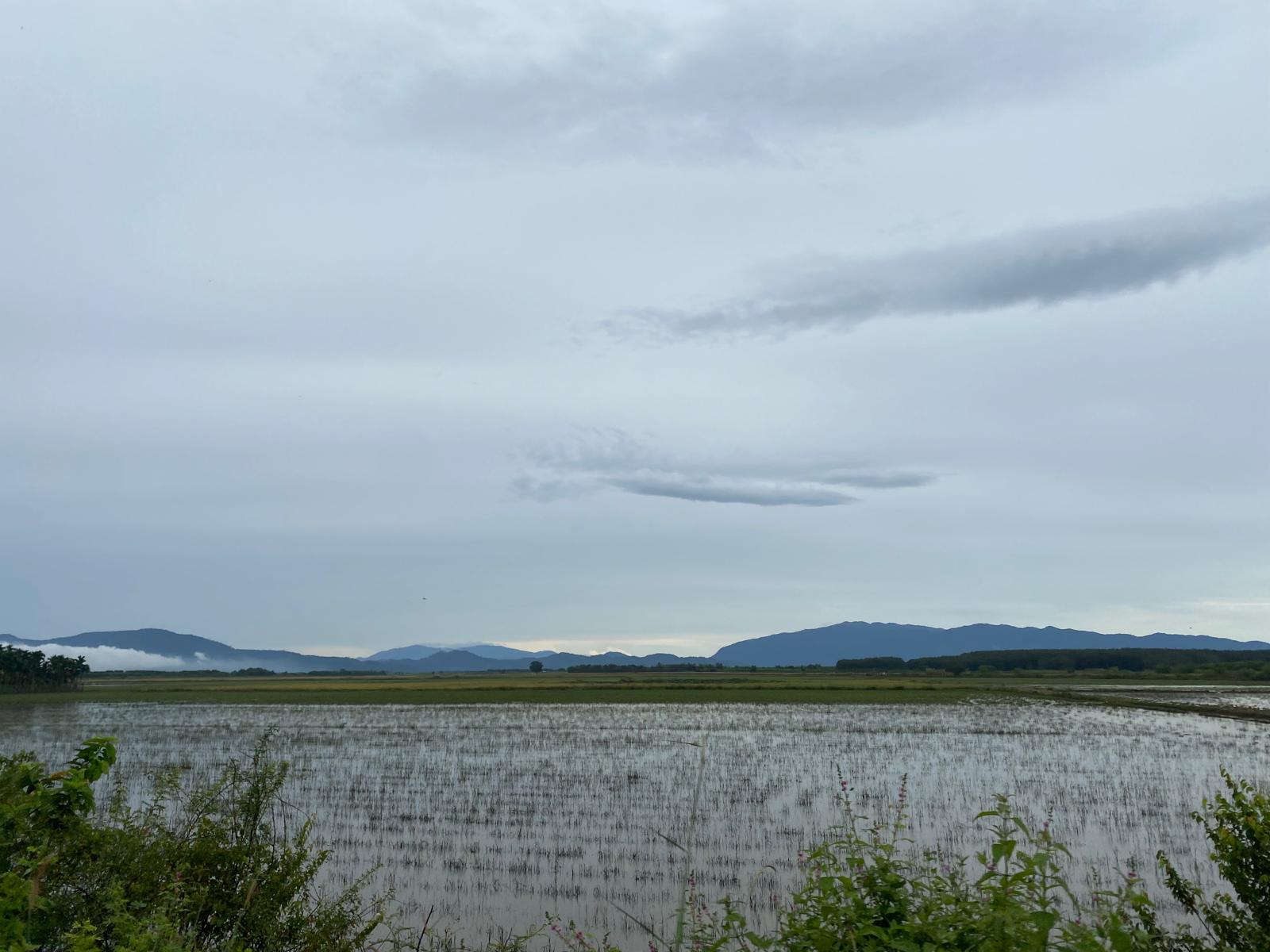
This morning, we headed out to visit three families living in a more remote area than usual. The road was longer, but the scenery was stunning.
1st Family
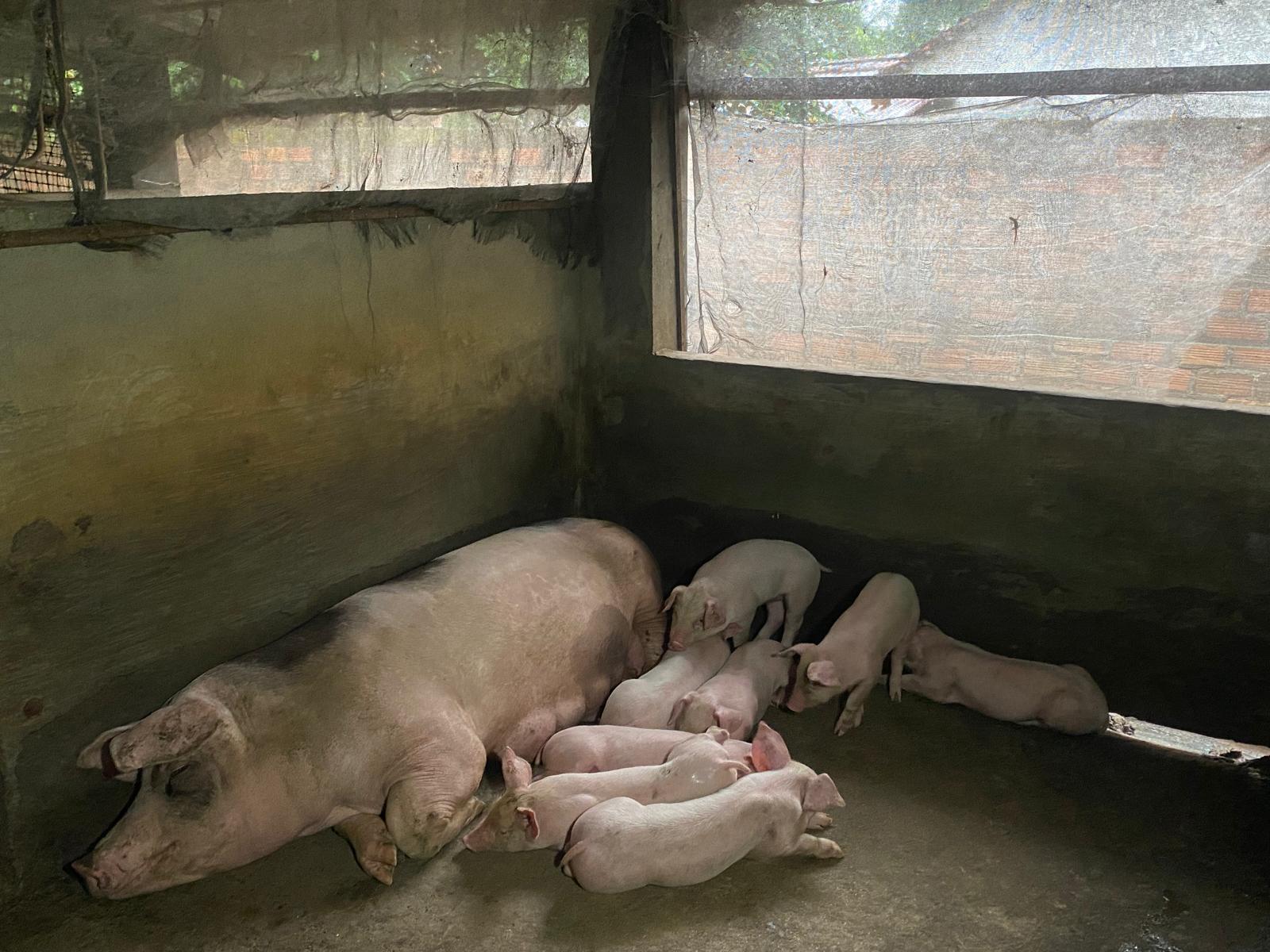
Our first visit was to a household of five: a couple, their son, his wife, and their young child. Their livelihood is a mix of livestock and agriculture. They raise one pig and ten baby pigs, and they cultivate 5 000 m² of rice fields along with another 5 000 m² of cashew trees.
They currently have a 5 million dong loan from Thien Chi to support their different activities. The family also uses a biogas system connected to their pig pens, allowing them to cook using methane, a model they adopted independently back in 2016.
In the past, Thien Chi helped them through the pig-bank model, but today they manage their own pig production.
(You can read more about these models here: agricultural-models-for-a-more-sustainable-future-21175 and more-sustainable-agricultural-models-supported-by-thien-chi-21182.)
The grandmother also makes Banh Canh noodles, which she sells in her daughter’s shop.
The family has been supported by Thien Chi since 2021.
2nd Family
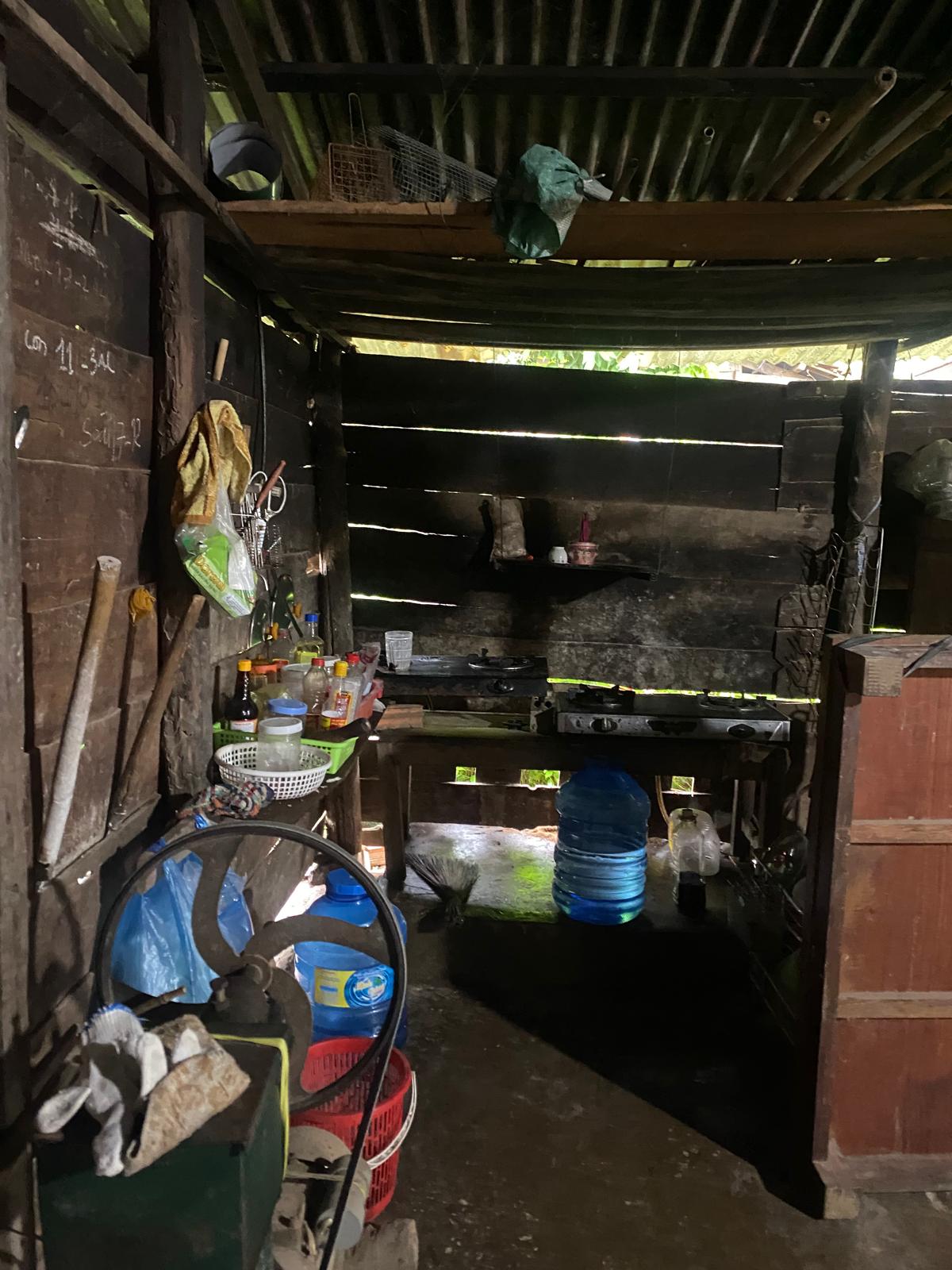
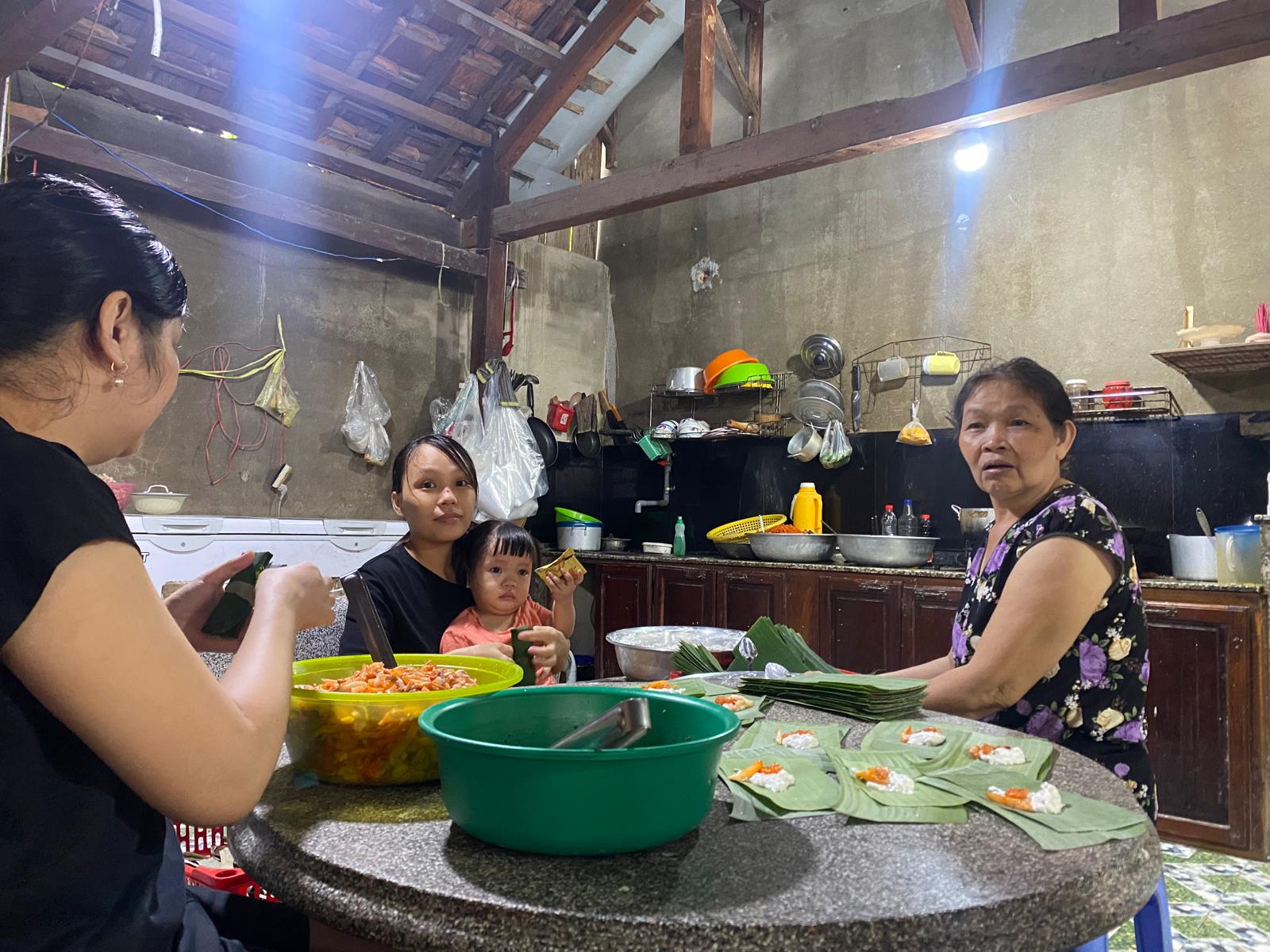
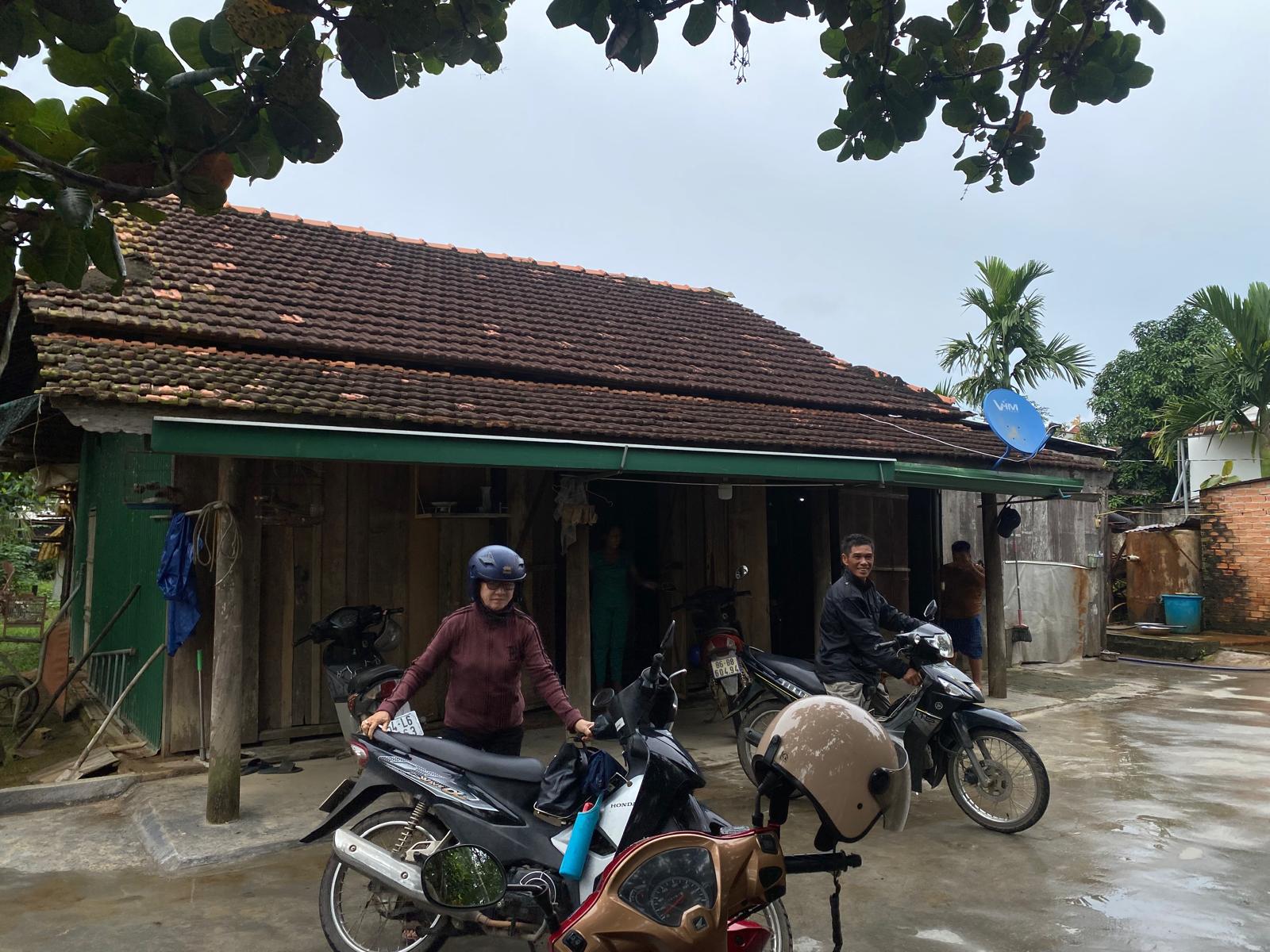
The second family was much larger, fifteen people in total, including six children from grade 4 down to kindergarten. They originally come from Hue and now rent a house belonging to a relative. Because they don’t own the home they live in, they aren’t eligible for government support such as health insurance or livestock assistance.
Their income comes from two sources. The father works in a factory, earning 7 million VND per month, and the whole family produces Banh Bot Loc (rice dough filled with meat and shrimp, wrapped in banana leaves). They sell 2 000 pieces per day to Ho Chi Minh City, earning about 300 000 VND daily.
Thien Chi currently provides a monthly scholarship for one of the children.
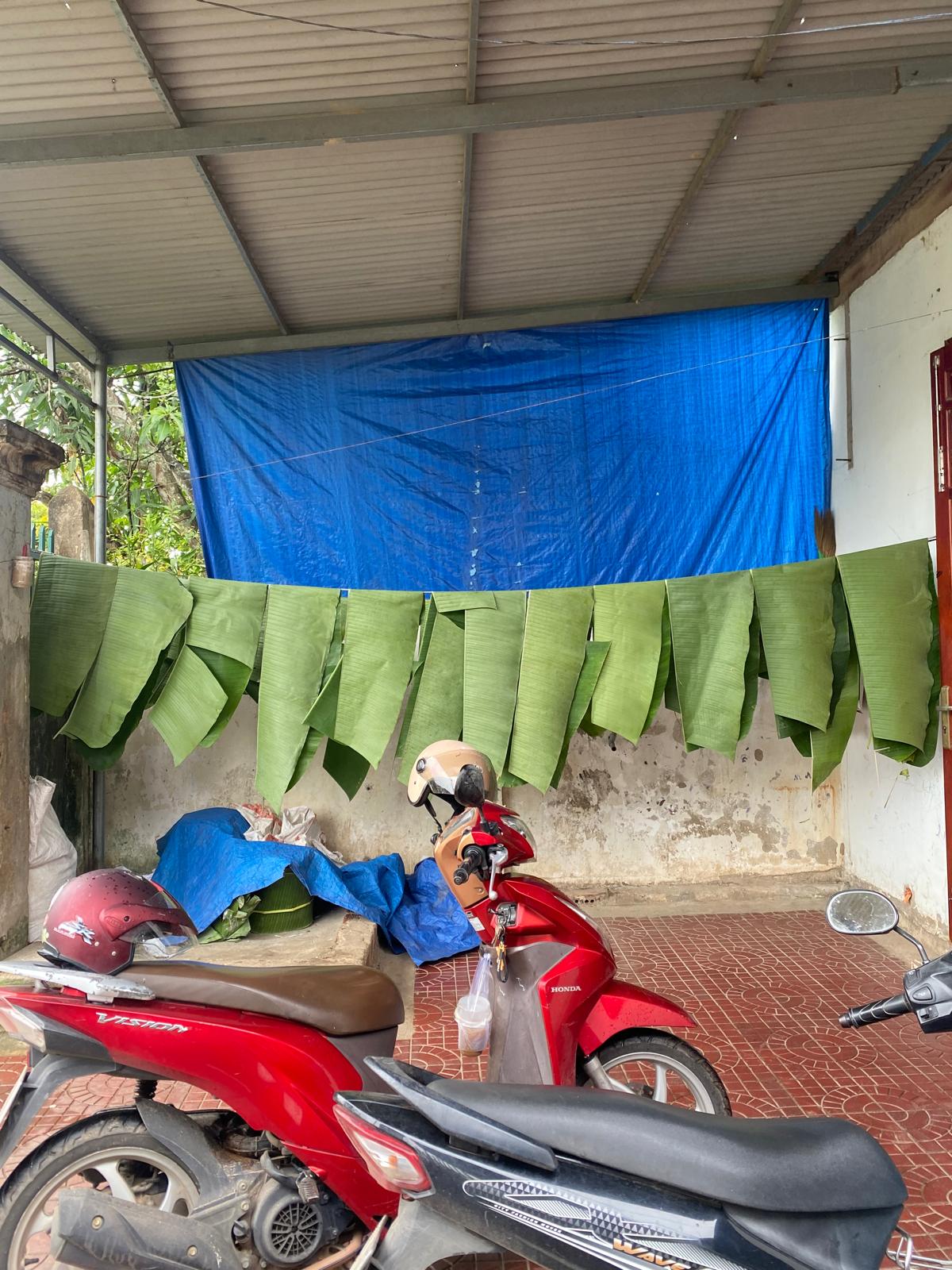
Throughout the house, banana leaves are drying everywhere, ready to be used for wrapping the Banh Bot Loc.
3rd Family
Our last visit was to a smaller household that now consists of three people. The grandparents passed away recently, leaving only the couple and their 11 year old son.
Their son has special needs and learns very slowly. He stopped going to school and communicates with only a few words. He cannot eat or wash by himself, so his mother stays at home to take care of him. She also raises the family's pigs.
The father works in a factory making bricks, and sometimes his wife assists when she can. He also cultivate 4 000 m² of rice and 5 000 m² of cashew trees.
They have a 5 million dong loan from Thien Chi to support their crops and their livestock (one pig and four baby pigs).
The family has been involved with Thien Chi since 2021.
Leticia