Livelihood Support for Ms. Tuyen’s Family in Hoai Duc Commune

22/03/2026 Views: 19 Admin

Ms. Tuyen’s family currently lives in Hoai Duc Commune with four members. Their living conditions remain difficult as their main income depends on unstable wage labor from both husband and wife.

In 2022, Ms. Tuyen received a loan from Thien Chi Center to develop her livelihood. With this financial support, her family invested in cultivating two sao of rice and one sao of vegetables to improve their income.

The family has two children. The eldest daughter has left school and is now working as a factory worker to help support the family. The younger daughter is in grade 12, preparing for her graduation exam and planning to apply to university, which makes education expenses a significant burden.
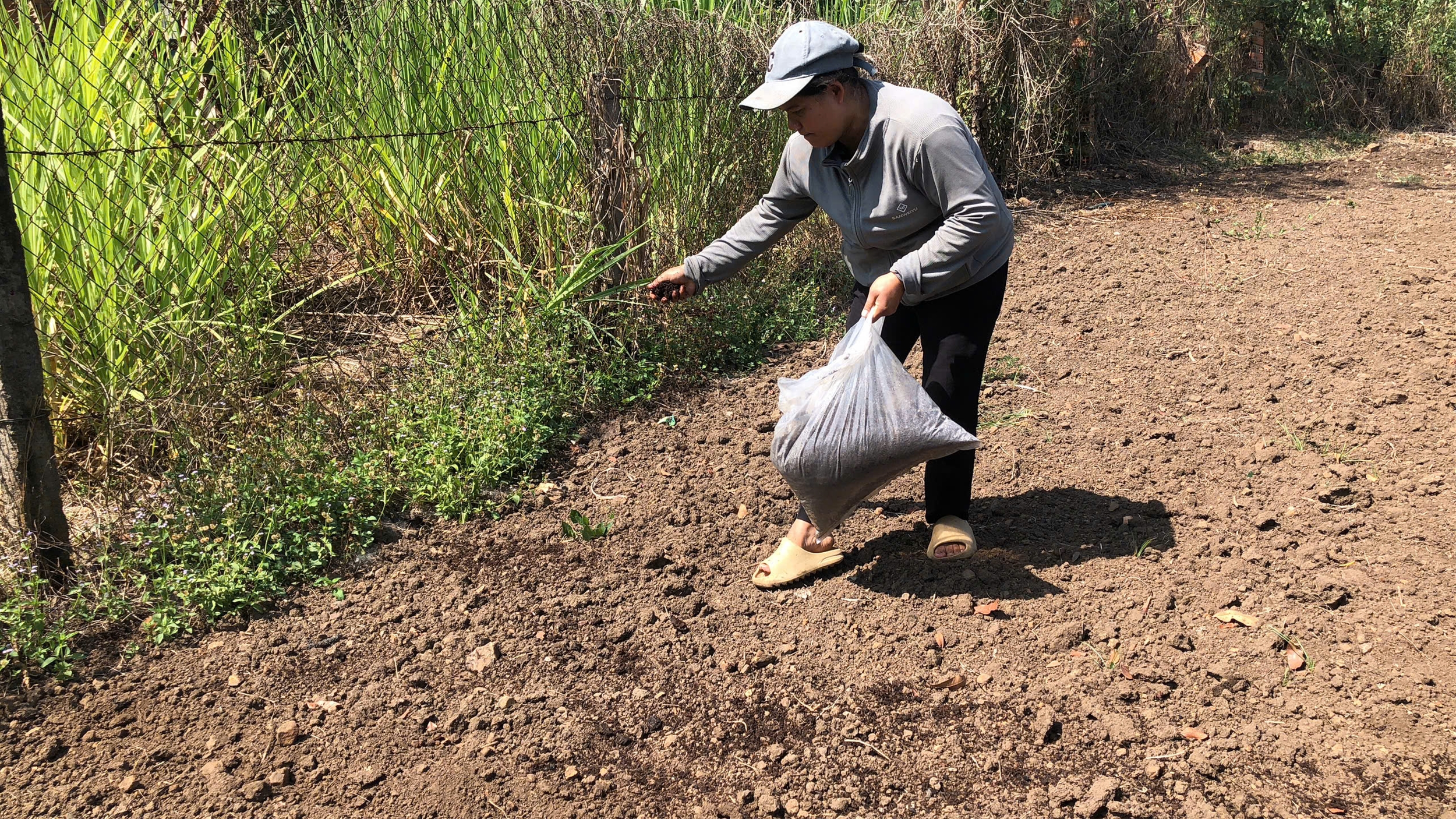
Every day, Ms. Tuyen’s husband works as a hired plowman for local farmers. However, this seasonal work is unstable, leading to irregular income. Meanwhile, Ms. Tuyen takes on casual labor when available and manages the family’s vegetable plot. On one sao of land, she divides it into two parts: half for growing onions and half for growing squash shoots, maximizing land use and increasing income.

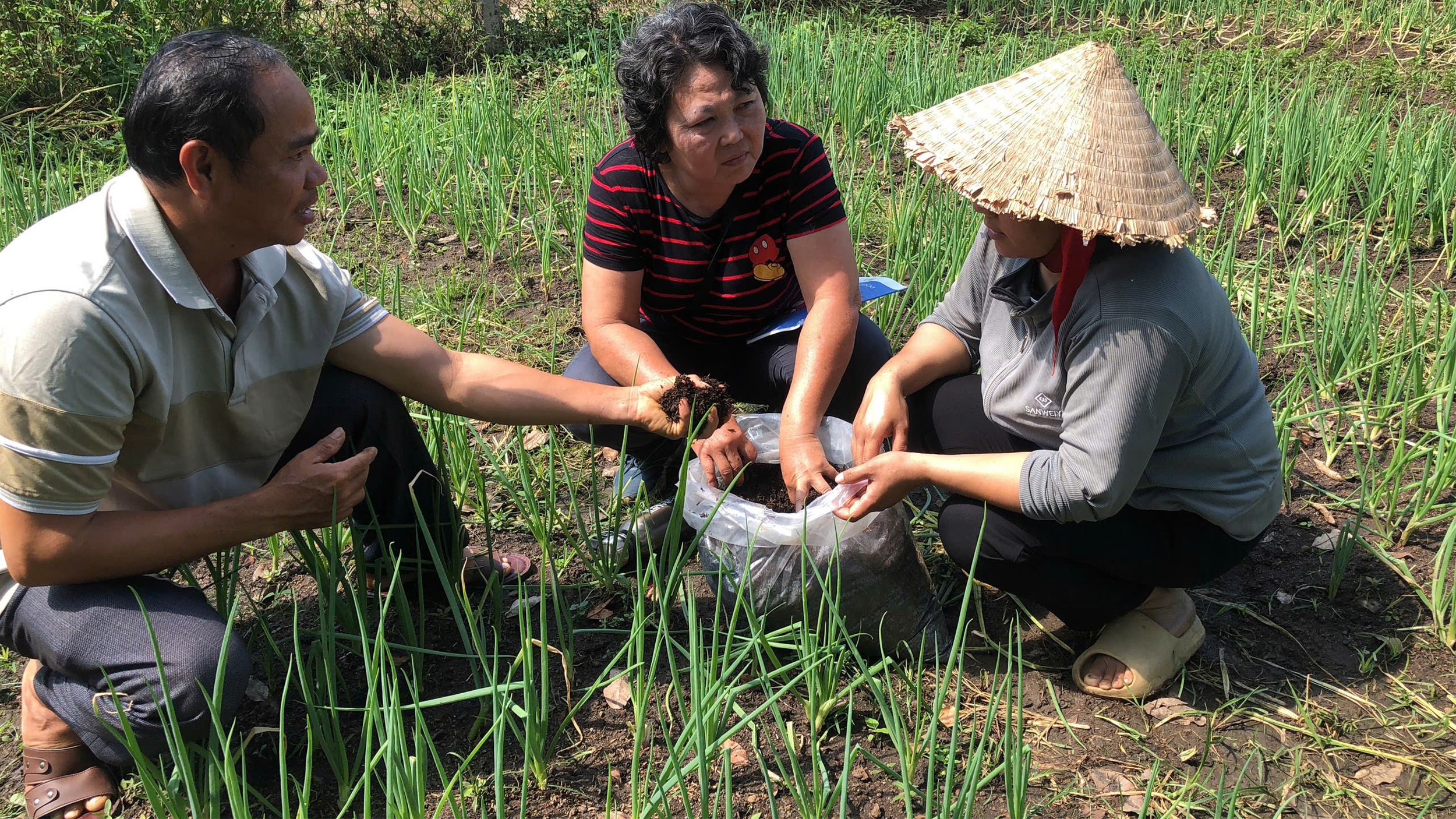
During the monitoring and support process, Thien Chi Center staff found that the family’s farmland was dry and lacked soil porosity, affecting crop growth. Therefore, the center supported her in using biochar fertilizer, which helps improve soil structure, enhances nutrient retention, and promotes better vegetable growth.

With this support, the family’s vegetable production is expected to increase productivity, improve income, and contribute to stabilizing their living conditions in the near future.
Other Campaigns

Enhancing Staff Capacity Through Field Exchange Activities

21/03/2026
Admin
30
To strengthen professional capacity and foster team cohesion, Thien Chi Center organized staff exchange activities across its project areas. Through these exchanges, staff members had the opportunity to visit and gain practical insights into different communities where the center is implementing development programs. This initiative not only created opportunities for mutual learning but also helped individuals better understand the nature of their work, local conditions, and the challenges and advantages encountered during project implementation.

Second round of capital support and continued support for women’s livelihoods

20/03/2026
Admin
45
Within the framework of the project “Autonomisation des femmes défavorisées grâce à l'indépendance économique et à l'accès aux soins de santé - Phase (2025 - 2028), funded by the Organisation internationale de la Francophonie (OIF), the Thien Chi Center continues to work closely with local community management boards to implement project activities in Lâm Đồng province (project areas belong to the formerly Binh Thuan province).

Restoring Dragon Fruit Plants After Floods Using Biochar

18/03/2026
Admin
53
During the flood in October 2025, farmers in Hàm Thạnh Commune suffered significant damage to their agricultural production, especially dragon fruit—the main crop of the area. Prolonged flooding not only caused waterlogging but also weakened the root systems, severely affecting plant growth and productivity. In response, the technical team from Thiện Chí Center implemented a solution using biochar-based compost to improve soil quality and support plant recovery.

Supporting Flood-Affected Families to Restore Dragon Fruit Gardens in Ham Thuan Nam

14/03/2026
Admin
68
In February 2026, Thien Chi Center – the Ham Thuan Nam Community Development Project continued its second round of support for 24 disadvantaged households affected by the floods that occurred in October 2025. These families live in Ham Thanh, Ham Kiem, Tan Lap, and Tan Thanh communes, areas that suffered significant damage after the heavy flooding.

TRAINING ON RECOGNIZING HYPERTENSION – JOINING HANDS TO PREVENT STROKE

12/03/2026
Admin
68
Recently, in Hoai Duc commune, Thien Chi Center organized a training session titled “Recognizing and Preventing Hypertension and the Risk of Stroke” for women participating in the Center’s microcredit loan program.

How Early Intervention Helps Reduce the Economic Burden on Families

07/03/2026
Admin
117
In recent years, more children with special educational needs have been identified. However, not all families have the financial capacity to access early intervention services from the beginning. Many parents delay assessment and support because they lack information or worry about the cost. In reality, early intervention not only supports children’s cognitive and behavioral development but also helps reduce the long-term economic burden on families.